
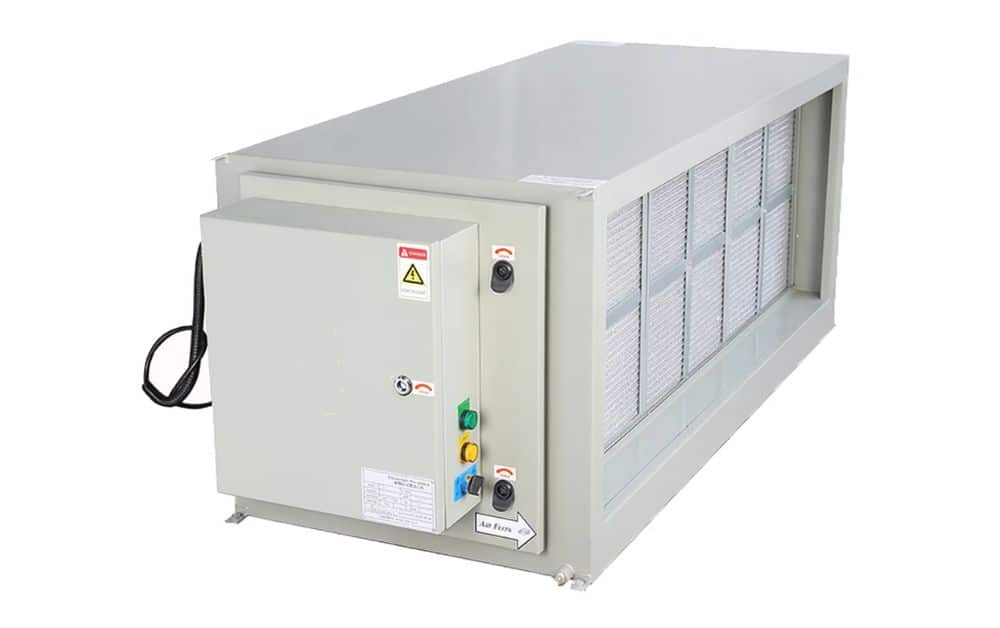
Combustion and other such processes in many industries, right from power plants to manufacturing units, emit exhaust gases loaded with dust, soot, ash, smoke, and other fine particulates. An efficient air cleaner, popularly known as an Electrostatic Precipitator (ESP), is fitted to avoid such pollutants being emitted into the atmosphere. Electro static precipitators in UAE and worldwide play a vital role in ensuring cleaner air and environmental compliance, and leading manufacturers of ventilation products like Airody cater to the industries in search of reliable ESP and air filtration solutions.
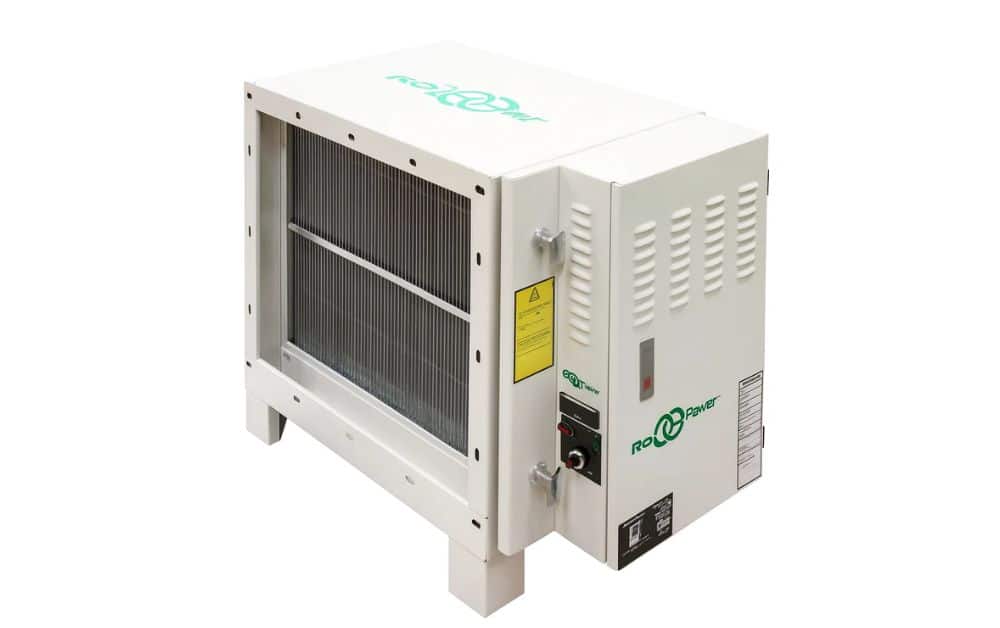
What is an Electrostatic Precipitator (ESP)?
An ESP is a filterless air-pollution control device that removes fine particles from a stream of gas – typically exhaust or flue gas – by using an electrostatic charge, rather than mechanical filtration.
Unlike conventional filters, which physically stop the particles with a barrier, such as meshes or fabrics, ESPs use electricity to charge particles within the gas stream and draw them onto oppositely charged plates. That makes ESPs highly effective and able to capture a wide range of particulates: dust, smoke, soot, ash, oil mist, and even particulates at the microscopic level.
How Does an ESP Work — The Working Principle
The operating principle of an ESP can be summarized with the following steps:
1. Gas flow through the unit
In the ESP, exhaust gas with particulate matter flows through a series of metal electrodes, usually in the configuration of discharge (ionizing) electrodes and collecting plates or surfaces.
2. Ionization / Charging of Particles
A high-voltage DC power supply energizes the discharge electrodes. This high voltage creates a strong electric (corona) field that ionizes the gas around the electrodes and forms electrons/ions. Particles moving through this ionized region acquire an electrostatic charge, usually negative.
3. Collection on oppositely charged plates
The collecting electrodes, typically grounded or oppositely charged, attract the charged particles. Consequently, dust, soot, ash, or other particulate matter migrates and deposits on these plates.
4. Periodic cleaning/removal of collected ash
With time, particles accumulate on the plates. In order to maintain efficiency, ESPs use mechanical methods (such as rapping or vibration of the plates) to dislodge the accumulated dust, which falls into hoppers or bins at the bottom, from where it can be collected and disposed of. This cleaning can often be done without interrupting the gas flow.
Depending on the nature of the particulate matter and application, ESPs can be designed as dry (for dry soot, ash, dust) or wet (for oily or sticky mists, tar, resin) precipitators.
Why Electrostatic Precipitators Are Widely Used
Several reasons account for the popularity of ESPs in industrial circles:
- High collection efficiency: ESPs can remove as much as 99% (or even higher) of particulate matter, including wonderful particles, from exhaust gases.
- Able to handle large gas volumes: Power plants, steel mills, and cement factories, among others, emit high amounts of gas; the ESP is able to manage high flow with heavy dust loads and maintain low pressure drop.
- Energy efficiency: Because ESPs act only on the particulate matter and not on the whole gas stream, the energy consumption by ESPs is relatively less when compared to conventional filters or scrubbers.
- Continuous operation and low maintenance: The design provides continuous airflow, and the cleaning is periodic by rapping without stopping the industrial process. Also, no disposable filters are used; hence, less waste and lower operational cost.
- Versatility: ESPs work under a variety of conditions — high temperatures, large gas flows — and can handle dry dust, smoke, or oily/wet mists with either the dry or the wet ESP design.
For industries needing to maintain environmental regulations, ensuring workplace safety and cleanliness in emissions, ESPs offer a reliable, cost-effective solution.
Limitations & Things to Note
Despite their many advantages, ESPs do have some limitations:
- High initial cost and space requirement: The installation of an ESP requires a considerable investment in addition to enough physical space, which may not be viable in small-scale setups.
- Limited to particulate pollutants: While ESPs are excellent at removing dust, smoke, ash, and mist, they cannot remove gaseous pollutants (e.g., sulfur dioxide, NOx) or volatile organic compounds (VOCs) on their own.
- Dependency on particle characteristics: the efficiency can be affected by particle size, dust resistivity, gas temperature, gas velocity, and flow conditions. Particles that have particularly high resistivity may bind too strongly to plates and therefore be hard to clean; conversely, very low-resistivity particles may not bind at all well.
- Issues related to maintenance and cleaning: dust layers may set in over time, and their rapping or cleaning must be effectively executed; very sticky or high-resistivity dust may reduce performance or require extra conditioning.
Hence, though ESPs have a wide range of applications, their design and operating process must take into consideration the nature of particulate matter, gas flow, and operating conditions.
Common Applications
Mainly due to their capability of handling large volumes of exhaust gases and their effectiveness in the removal of fine particles, the use of ESPs is widespread in:
- Thermal power plants (coal, biomass, gas) – collection of fly ash from flue gases.
- Manufacturing units of cement are meant for trapping dust and kiln emissions.
- Steel and metallurgical plants: for dust removal from furnaces or heat-treatment exhausts.
- Chemical plants, refineries — to collect catalytic dust, oil mist, smoke, tar, or chemical particulates.
- Industrial boilers, incinerators, waste-management facilities.
In many of these settings, ESPs are integral to pollution control, regulatory compliance, and occupational and public health safety.
Electrostatic Precipitators in the UAE — Relevance & Role
In those locations, such as the UAE, where industrial development is high and environmental legislation is strict, electrostatic precipitators in the UAE form part of the very backbone of pollution control machinery in factories, power plants, cement manufacturing units, and other installations of these kinds. Companies involved in these industries depend on sturdy and practical ESP systems to control their emissions effectively and comply with the law for air quality preservation.
That is where trusted manufacturers and suppliers, such as Airody, come into play. Airody, being one of the leading ventilation product manufacturers in the Middle East, offers tailored ESP solutions and air-filtration systems that are suitable for the climate, industrial demands, and regulatory standards in the region. Their expertise helps industries deploy high-performance ESPs, ensuring both environmental safety and operational efficiency.

Conclusion
An ESP is an efficient, effective, and versatile air-pollution control device that employs electrostatic charging to remove dust, smoke, ash, and other delicate particulate matter from exhaust gases with no traditional filters. Its high efficiency, often up to 99%, handling of huge gas volumes, low energy consumption, and minimal maintenance make the device indispensable in such industrial applications. With growing environmental awareness and regulations, especially in regions such as the UAE, electrostatic precipitators have emerged as a staple for industries committed to clean emissions. And manufacturers like Airody Trading make sure these industries receive high-quality, reliable ESP and ventilation solutions tailored to the regional atmosphere.