
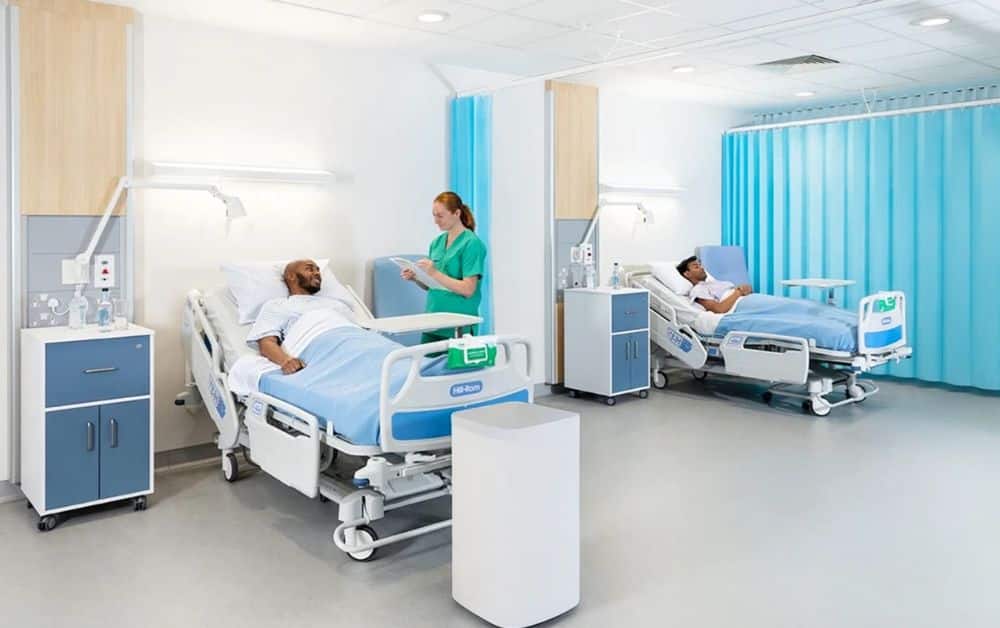
Hospitals should be havens of recuperation, but their air can transport a concoction of pollutants that compromise the recovery of patients and the well-being of staff. This is why various hospital administrators invest in sophisticated solutions for air cleaning. In contexts such as the UAE, where numerous modern hospitals barely compromise on standards of hygiene and comfort, indoor air cleanliness is of prime importance. If you are searching for Hospital air purification in UAE, it is essential to understand first what types of pollutants are common, so that later on, you can know how to eliminate them effectively.
What Pollutes Hospital Air?
Particulate Matter (PM₂. ₅, PM₁₀, Dust) & Bioaerosols
The particulates can be from dust raised when renovating, to skin flakes, lint from linens, and droplets from patient respiration. These include fine particles, PM₂.₅ or larger, mold spores, bacteria, and fungal spores. Bioaerosols, or microscopic bacteria or viruses suspended in air, are a particular concern in wards, ICUs, operating rooms, and isolation units. Such contaminants are among the leading contributors to nosocomial infections.
Volatile Organic Compounds (VOCs) & Chemical Fumes
Chemical pollutants represent a significant challenge in medical facilities. Cleaning agents, disinfectants, solvents, anesthetic gases, and fumes from sterilization or sterilizing equipment are all capable of emitting VOCs. These may include substances like isopropanol, ethanol, or other volatile disinfectants, exposure to which may cause irritation, respiratory problems, or heightened sensitivity in patients and staff.
Elevated CO₂, Medical Gases, Odours & Chemical Residues
Human occupancy and medical procedures increase levels of CO₂. Use of anesthetic or sterilizing gases can also add to the levels of chemical pollutants. These will accumulate if ventilation is not good, thus leading to stuffy air that might exacerbate headache, fatigue, or slow recovery.
Pathogens & Infectious Agents (Viruses, Bacteria)
The airborne pathogens, which are usually disseminated either by droplets or aerosols, pose a serious threat. Overcrowded waiting rooms, standard wards, and even isolation rooms can all carry viruses, bacteria, and fungal spores that create infections.
Why These Pollutants Are Dangerous
- Patient health & recovery: The presence of inevitable pollutants delays healing, worsens respiratory conditions, or even provokes allergic reactions, particularly among immunocompromised patients and those who have just undergone surgery.
- Infection risk: Airborne pathogens result in HAIs that threaten the safety of both the patient and the staff.
- Operational hazards: include chemical fumes, VOCs, anesthetic gas leaks, or dust that may affect staff health over long periods.
- Regulatory compliance: Many healthcare guidelines demand strict indoor air quality standards, especially in the most critical areas of operating theatres, ICUs, neonatal units, and isolation wards.
Thus, the key steps for a hospital are to follow a layered strategy that incorporates ventilation, filtration, and air-cleaning technologies.
How to Remove or Reduce These Pollutants
Here are some of the most effective measures, many of which have become standard practice worldwide.
1. High‑Efficiency Filtration HEPA / Medical-Grade Filters
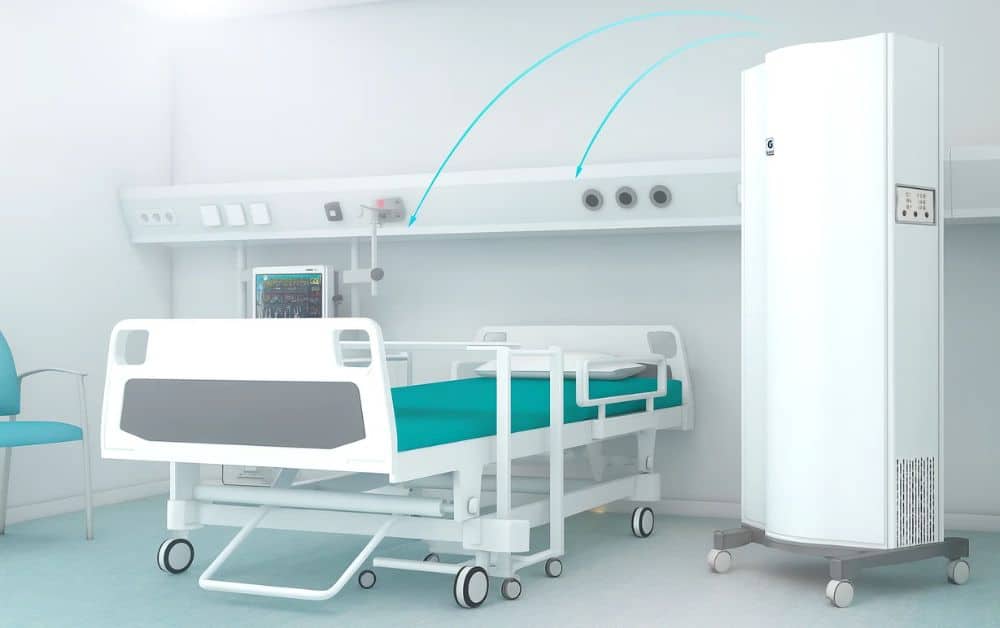
The backbone of hospital air purification is filtration. HEPA filters capture particles, pollen, mold spores, bacteria, and almost all airborne pathogens. HEPA (H13 or H14) filters for medical use can remove at least 99.97% mass of particles ≥ 0.3 μm according to the Eurovent 4/9 standard. These filters may be used in centralized HVAC systems or as room air cleaners that are portable, especially in wards, ICUs, and patient rooms. Proper upkeep is absolutely critical because clogged or dirty HEPA filters become less efficient over time.
2. Adequate Ventilation & Air Exchange Fresh Air + Recirculation
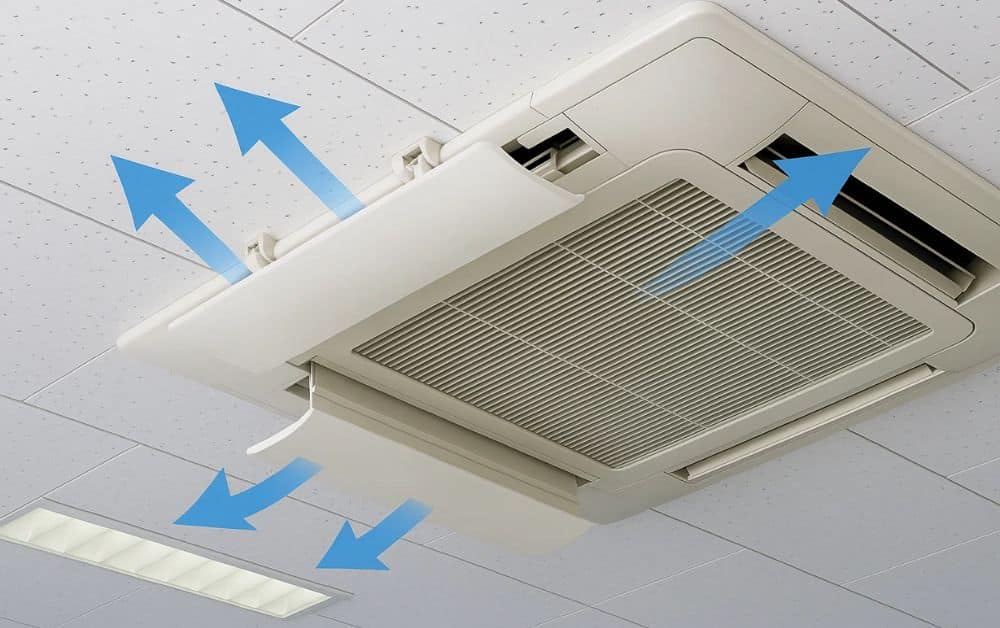
Filtration is not enough. Hospitals need to take in an ample amount of fresh air, and the number of changes per hour with fresh air is essential. Adequate ventilation dilutes the concentration of CO₂, chemical fumes, and odours, which reduces the residual polluting amount. Units that have to remain in a critical zone (such as operating rooms or isolation units) should be under negative or positive pressure to the surrounding area so as not to allow contaminated air from being disseminated.
3. Ultraviolet Germicidal Irradiation (UV‑C / UVGI) as Adjunct
UV‑C air disinfection, also known as Ultraviolet Germicidal Irradiation (UVGI), can inactivate airborne pathogens such as viruses, bacteria, and fungi when the air passes through UV‑C light fixtures installed in ducts or upper-room installations. UVGI should not replace HEPA filtration; however, it is a good addition to the measures that can be implemented in addition to filtration and good ventilation.
4. Activated Carbon / Adsorption Filters for Gases & Chemicals
Most of the hospitals use adsorption filters like activated carbon filters for tackling VOCs, chemical fumes, anesthetic gases, odours, and disinfectant residues within their HVAC or dedicated exhaust/fume systems. In laboratories, pathology rooms, chemical preparation areas, or spaces where sterilizing agents are dealt with, these kinds of filters are a must to avoid the flow of harmful vapors.
5. Multi-Layer Air Purification Strategy Combination
However, the most effective results are achieved by a combination of approaches: high‑efficiency filtration (HEPA), good ventilation (fresh air + air exchange), UVGI, and adsorption filters for gases/odours. This layered strategy significantly reduces particulate pollution, airborne pathogens, VOCs, CO₂, odours, and hence lowers the risk of infections and offers a healthier indoor environment.
Why investing in hospital‑grade air purification matters — and who does it right
In light of such risks and solutions, hospitals everywhere, including in the Middle East and the UAE, are adopting advanced air-cleaning systems to protect patients, staff, and visitors.
One of the leading names in this transition is Airody, a key player among ventilation product manufacturers in the Middle East. Airody deals in customized HVAC and ventilation solutions for hospitals and healthcare facilities, ensuring that these premises meet the strict indoor‑air standards. Be it filtration, air exchange, balancing pressure zones (positive/negative), or integrating UV‑C/adsorption solutions, one can find the comprehensive and reliable infrastructure offered by Airody’s portfolio with regard to “Hospital air purification in UAE” and beyond.
The key shall be partnering with trusted manufacturers like Airody to upgrade outdated HVAC systems, installing advanced air-cleaning units, and keeping regimented maintenance and filter replacement schedules—essentials for real-world efficacy.
Key Takeaways & Recommendations for Hospital Administrators
- One single solution cannot be depended upon. A multi-layered approach puts together HEPA filtration, ventilation, UVGI, and adsorption.
- Emphasize the use of medical-grade HEPA filters (H13/H14) in critical areas such as ICUs, operating theatres, isolation wards, and laboratories.
- Ensure adequate ventilation, providing a regular number of air changes per hour; monitor levels of CO₂, humidity, and airflow to prevent the buildup of gases or stale air.
- Use adsorption filters where chemical fumes, VOCs, anesthetic gases, or disinfectants are commonly used.
- Schedule rigorous maintenance: regular replacement of filters, servicing of HVAC, cleaning of ducts, replacing UV‑C lamps, and monitoring of air quality.
- You should consider working with experienced ventilation-product manufacturers, like Airody, when designing or upgrading hospital HVAC systems in the UAE or the Middle East.
Conclusion
Lastly, clean and safe indoor air is a vital yet often underrated part of hospital care. Starting from particulate matter and bioaerosols to chemical fumes and pathogens, so many pollutants put in jeopardy the health and recovery of a patient. But with a well-thought-out multi-layer air-cleaning strategy that includes high-efficiency filtration, proper ventilation, UVGI, and gas adsorption, hospitals can minimize those risks. For institutions that are investigating Hospital air purification in UAE, working with established manufacturers of ventilation products, such as Airody Trading, provides an effective path toward the realization of high indoor air quality standards, safeguarding health, preventing infection, and thus providing a safer environment for healing.